Abstract
Introduction: In 2023, the National Tuberculosis Control Program (NTP) achieved its highest ever tuberculosis treatment coverage rate since its inception, with the rate of treatment coverage (incident case reporting) increasing from 70% in 2022 to 81% in 2023, a jump of 11 percentage points, and a decrease in the number of missing incident cases from 5,993 (30%) to 3,786 (19%). These results were achieved amidst an accelerated tuberculosis control effort, including the implementation of innovative interventions in line with international commitments, and a radical withholding of health information by striking healthcare providers. The PNT had to organize data entry workshops on the DHIS2 platform (the standard reporting tool) and active data collection missions to prepare its annual performance report. This study was carried out to evaluate the PNT data management system and to assess the quality of the data in the 2023 performance report. Methodology: This is a quantitative, cross-sectional, descriptive, and analytical study conducted at the PNT, in the monitoring and evaluation office. The analysis of the collected data was based on reports entered into DHIS2, the Excel file for active data collection, data quality audit tools, and the data management system evaluation grid. Results: The TB data management system performed well, with a quality index of 85%. The national data completeness rate for National Tuberculosis Control Program (NTP) entries in the DHIS2 system was 89.4%, becoming lower in regions with higher rates of data retention, such as Kolda (33.3%), Fatick (78.1%), Tambacounda (82.1%), and Thies (82.5%). The national compliance rate for reporting new TB cases was 88%, below the 95% standard, with 1,744 additional new cases reported in the performance report compared to the data entered in DHIS2. The rate was 96% for the treatment success rate indicator and 99% for the mortality rate and the number of people who had contact with TB patients and initiated preventive treatment. Conclusion: The results obtained show that the active data collection implemented by the NTP has made it possible to capitalize on the missing data on incident TB cases in the DHIS2 in the performance report and to suggest that there is likely added value from the innovative interventions implemented by the program in increasing the detection of incident TB cases in 2023. However, efforts must continue to optimize the TB information management system and the quality of data entered in DHIS2, the reference reporting tool.
|
Published in
|
Central African Journal of Public Health (Volume 12, Issue 5)
|
|
DOI
|
10.11648/j.cajph.20261205.16
|
|
Page(s)
|
308-316 |
|
Creative Commons
|

This is an Open Access article, distributed under the terms of the Creative Commons Attribution 4.0 International License (http://creativecommons.org/licenses/by/4.0/), which permits unrestricted use, distribution and reproduction in any medium or format, provided the original work is properly cited.
|
|
Copyright
|
Copyright © The Author(s), 2026. Published by Science Publishing Group
|
Keywords
Audit, Data, National Tuberculosis Control Program, Senegal
1. Introduction
Tuberculosis (TB) remains one of the world's major public health emergencies. Despite medical and technological advances, it continues to pose a significant threat to public health, particularly in low- and middle-income countries. According to the World Health Organization (WHO), nearly 10.8 million new cases were recorded in 2023, including approximately 1.3 million in children and adolescents under 15 years of age, and 662,000 cases co-infected with HIV. The disease remains the leading cause of death from a single infectious agent, ahead of HIV/AIDS, with nearly 1.3 million deaths annually. These figures reflect the scale of the epidemic and the need for strengthened international mobilization
| [1] | World Health Organization. Global tuberculosis report 2023. Geneva: WHO; 2023. |
[1]
.
In response to this situation, the WHO launched the "End TB" strategy in 2015, which aims to reduce incidence by 90% and mortality by 95% by 2035, while eliminating the catastrophic costs borne by families. This strategy is part of the Sustainable Development Goals (SDGs), which consider ending the tuberculosis epidemic a priority. It is based on an integrated approach, combining early detection, effective treatment, targeted prevention, and reducing inequalities in access to care
| [2] | World Health Organization. The End TB strategy: global strategy and targets for tuberculosis prevention, care and control after 2015. Geneva: WHO; 2015. |
[2]
.
In Senegal, tuberculosis remains a national public health priority. The incidence decreased from 140 cases per 100,000 inhabitants in 2015 to 110 cases per 100,000 inhabitants in 2023, representing an 11% reduction. In 2023, the country reported 16,660 new cases and relapses out of an expected 20,446, with a treatment success rate of 89% and a mortality rate of 3%. These results demonstrate significant progress, but nearly 19% of cases remain undetected or unreported, which constitutes a major obstacle to achieving international targets
| [3] | National Tuberculosis Control Program (PNT). Annual Performance Report. Ministry of Health and Social Action; 2023. |
| [8] | National Tuberculosis Control Program (PNT). Annual Performance Report. Ministry of Health and Social Action; 2022. |
[3, 8]
.
The National Tuberculosis Control Program (NTP), responsible for coordinating the national response, plays a central role in implementing detection, treatment, and prevention strategies. Since 2023, it has used District Health Information Software 2 (DHIS2) as its primary reporting tool, in accordance with the National Health and Social Information System (NHSIS)
| [4] | Ministry of Health and Social Action (MHSA). National Health and Social Development Plan 2019-2028. Senegal; 2019. |
| [5] | National Tuberculosis Control Program (PNT). Study on the stigma associated with tuberculosis in Senegal. Ministry of Health and Social Action; 2023. |
[4, 5]
.
However, challenges remain: insufficient data completeness, regional disparities, withholding of health information, and dependence on parallel mechanisms such as active data collection. These limitations weaken the reliability of the information system and compromise the country's ability to properly assess its performance
| [5] | National Tuberculosis Control Program (PNT). Study on the stigma associated with tuberculosis in Senegal. Ministry of Health and Social Action; 2023. |
[5]
.
In this context, the data quality audit of the 2023 performance report is essential. It allows not only for verification of the completeness, compliance, and consistency of the information produced, but also for an evaluation of the tuberculosis information management system in place. This process aims to identify gaps, propose concrete solutions, and strengthen epidemiological surveillance. It constitutes a key step in consolidating achievements, improving the credibility of the health information system, and ensuring that tuberculosis control policies are based on sound evidence.
Conceptual Framework
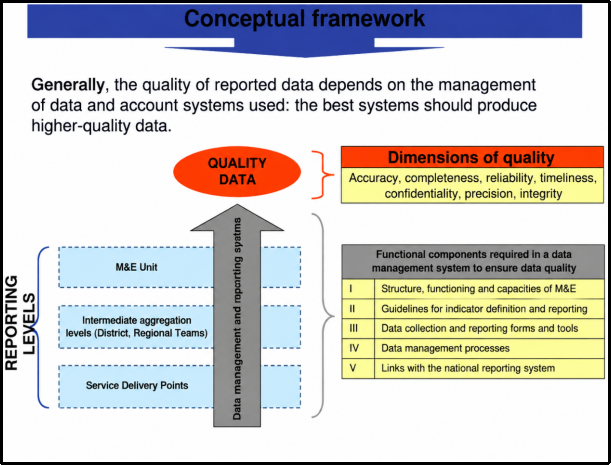
The success of the tuberculosis control program depends on the availability of high-quality and sufficiently comprehensive data to measure the reach and effectiveness of interventions. Data quality rests on six key factors:
1) qualified human resources: staff trained in NTP guidelines and in the use of collection and reporting tools, available in sufficient numbers at each level;
2) infrastructure and logistics: computer equipment, information management support, storage devices, electricity, internet connection and access to the District Health Information Software 2 (DHIS2) platform;
3) integration with NHSIS: data entry into DHIS2 after validation, regular organization of coordination, monitoring and audit meetings;
4) data recording and collection: availability of physical and electronic tools to collect information;
5) data management procedures: clear guidelines on the recording, transmission and validation of reports, role of the District Medical Officer (DMO) in verification and systematic feedback to providers;
6) Data storage system: physical archiving of forms and electronic archiving via DHIS2, with confidential management of sensitive data (particularly for cases of drug-resistant tuberculosis).
This conceptual framework shows that the quality of NTP data depends on an integrated set of human resources, infrastructure, procedures and control mechanisms, which must work together to ensure reliable and useful information for decision-making
| [3] | National Tuberculosis Control Program (PNT). Annual Performance Report. Ministry of Health and Social Action; 2023. |
[3]
.
Figure 1. Conceptual framework for data management and reporting systems, functional areas, and data quality (Data Quality Assessment Tool, Implementation Manual).
2. Purpose and Objectives
2.1. Aim
The aim of this study was to help identify the explanatory intervention for the great progress made in the reporting of incident TB cases in 2023.
2.2. General Objective
Conduct a national-level audit of the quality of NTP data in 2023.
2.3. Specific Objectives
The specific objectives (SO) of this study are as follows:
SO 1: Measure the quality of the TB data management system of the Monitoring, Evaluation and Epidemiological Surveillance Office of the NTP in 2023;
SO 2: Measure the completeness of TB reports for the 14 Regional Health Directorates (RHD) of Senegal in 2023;
SO 3: Verify the conformity of data on the reporting of incident TB cases (new cases of all forms + relapses) between DHIS2 and the 2023 NTP performance report;
SO 4: Verify the conformity of data on cases of successfully treated tuberculosis patients between DHIS2 and the NTP performance report in 2023;
OS 5: Verify the conformity of data on tuberculosis patients who died during their treatment, between DHIS2 and the NTP performance report in 2023.
3. Study Framework
The Health Information System of the National Tuberculosis Control Program (NTP)
The National Tuberculosis $Program's (NTP) health information system is an integrated component of the National Health and Social Information System (NHSIS), which is under the responsibility of the Health and Social Information System Division (HSISD) of the Ministry of Health and Social Action
| [4] | Ministry of Health and Social Action (MHSA). National Health and Social Development Plan 2019-2028. Senegal; 2019. |
[4]
. The HSISD ensures the overall governance of the system, overseeing the collection, analysis, and dissemination of health data, as well as its quality and availability for decision-making. Like other health programs, the NTP feeds into this system through its monitoring and evaluation units, regional focal points, and operational staff, thus guaranteeing a regular flow of information from the field
| [3] | National Tuberculosis Control Program (PNT). Annual Performance Report. Ministry of Health and Social Action; 2023. |
[3]
.
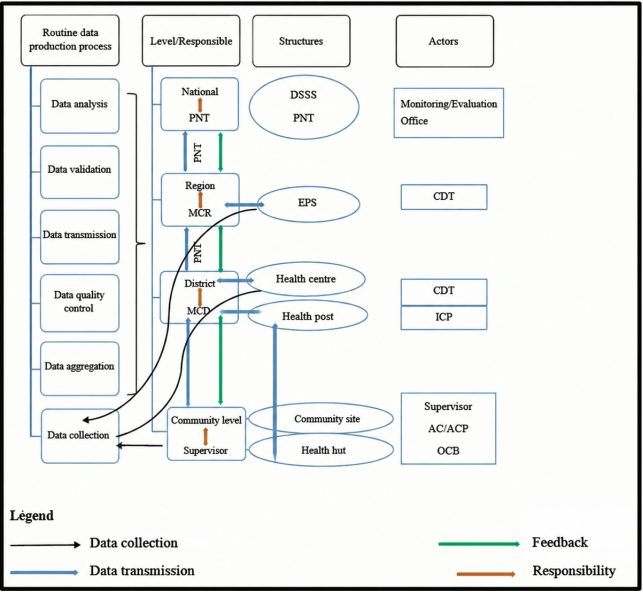
The data comes from routine activities conducted in public, private, and semi-public health facilities, as well as Tuberculosis Diagnostic and Treatment Centers (TDCs). These facilities are the primary collection points, where tuberculosis cases are registered and monitored. The information collected is then transmitted to the Regional Health Directorates (RHD), which consolidate and validate it before sending it to the NTP Central Unit. The latter compiles and analyzes the data to produce quarterly and annual reports, which are integrated into the NHSIS and used for strategic management
| [5] | National Tuberculosis Control Program (PNT). Study on the stigma associated with tuberculosis in Senegal. Ministry of Health and Social Action; 2023. |
[5]
.
The system relies on a modern digital infrastructure, with the DHIS2 platform, adopted by Senegal in 2013, serving as the official data entry and reporting tool. This platform enables data centralization, harmonization of data entry formats, and improved accessibility for various stakeholders. The national data center in Diamniadio provides secure data hosting, guaranteeing digital sovereignty and the confidentiality of sensitive information, particularly that related to drug-resistant tuberculosis
| [6] | Directorate of Health and Social Information Systems (DSISS). Technical report on the integration of DHIS2 into SNISS. Senegal: Ministry of Health and Social Action; 2023. |
[6]
.
To ensure data quality, several complementary mechanisms are implemented. Performance monitoring committees operate at the national and regional levels to provide guidance and coordination. Regular data reviews are conducted to verify consistency, completeness, and compliance. Supervision and field missions are used to monitor information quality, identify gaps, and strengthen the capacity of local stakeholders. Finally, systematic feedback is provided to service providers to improve data entry and reliability
| [5] | National Tuberculosis Control Program (PNT). Study on the stigma associated with tuberculosis in Senegal. Ministry of Health and Social Action; 2023. |
| [7] | Ministry of Health and Public Hygiene (MHPH). National Tuberculosis Data Review 2022. Senegal: 2022. |
[5, 7]
.
The NHSIS is jointly funded by the State and technical and financial partners. This combination allows for the maintenance of the digital infrastructure, the training of human resources, and the guarantee of the system's sustainability. However, it also exposes the system to a dependence on external funding, which poses a challenge to its long-term viability
| [6] | Directorate of Health and Social Information Systems (DSISS). Technical report on the integration of DHIS2 into SNISS. Senegal: Ministry of Health and Social Action; 2023. |
[6]
.
Despite this robust architecture, implementation challenges persist. The completeness of data entered into DHIS2 remains insufficient in some regions, and these regional disparities affect the overall performance of the system. The withholding of health information by striking healthcare providers, due to organizational or logistical constraints, undermines the reliability of reports. Finally, the reliance on parallel mechanisms, such as active data collection, reflects a difficulty in ensuring systematic and exhaustive data collection through formal channels
| [9] | Technical and financial partners. Joint report on the financing of the SNISS. Ministry of Health and Social Action (MHSA); 2023. |
[9]
Figure 2. Tuberculosis Data Flow (excerpt from the NTP external review report, 2022).
4. Method
This study is based on a quantitative, cross-sectional, descriptive, and analytical approach, conducted within the monitoring and evaluation office of the National Tuberculosis Control Program (NTP). This methodology was chosen to allow for a systematic and objective analysis of the quality of the data collected and reported in 2023.
4.1. Type and Period of Study
This is a cross-sectional study covering the entire year 2023. The choice of this period allows us to take into account the four reporting quarters and to assess the regularity, completeness and conformity of the data on an annual basis.
4.2. Data Sources
The data used comes from three main sources:
1) the DHIS2 platform which is the official tool for entering and reporting health data in Senegal;
2) files from active data collection, developed during field missions and semi-annual review workshops, in order to catch up on delays or data entry gaps;
3) Data quality audit tools, including conformity and completeness assessment grids, as well as the system quality index assessment grid.
4.3. Indicators Studied
Four key indicators were selected because they are essential for measuring progress towards the objectives of the "End TB" strategy:
1) The number of reported incident cases (new cases and relapses, all forms combined);
2) The therapeutic success rate in drug-sensitive TB patients;
3) The death rate in drug-sensitive TB patients;
4) The number of contacts who have started preventive treatment (PTT).
These indicators make it possible to assess both the system's ability to detect cases, the quality of care, the associated mortality and the effectiveness of prevention strategies.
Parameters Analyzed
Three dimensions of data quality were studied:
1) completeness: which measures the proportion of expected reports actually captured in DHIS2;
2) Compliance: which assesses the concordance between the data entered in the DHIS2 and those appearing in the performance report.
Data conformance gap (DC) = |Value provided – Value found on site|. The ideal conformance rate is 100%
| [10] | World Health Organization, Understanding and using Tuberculosis Data (Understanding and Using Tuberculosis Data). |
[10]
;
system quality index (IQ), which is a composite score taking into account governance, procedures, resources, tools, skills, security and feedback.
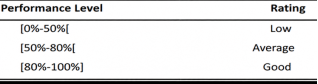
Quality Index = Total Score Achieved / Maximum Expected Score x 100. The ideal value for the IQ is 100%. The interpretation of the quality index results is regulated in the performance table below.
Figure 3. Quality Index Performance Assessment Grid.
4.4. Data Collection Tools and Procedures
Data were extracted from DHIS2 on specific dates and then reconciled with the active data collection Excel files. Standardized grids were used to assess completeness and compliance. The quality index was calculated using a weighted multi-criteria grid. The survey process followed several steps:
1) DHIS2 data by quarter and by region;
2) Comparison with performance report data and Excel files;
3) Calculation of completeness and compliance rates by indicator and by region;
4) data management system quality index.
4.5. Ethical Considerations
The study adhered to ethical principles of confidentiality and data protection. The information used was aggregated and contained no individual identifiers. Institutional authorization from the NTP and DSISS was obtained for access to the databases.
5. Results
5.1. Overall Performance of the Data Management System
The evaluation of the NTP's data management system revealed an overall quality index of 85%, indicating a performance deemed "good." This score reflects relatively sound governance, the availability of data collection tools, and satisfactory analytical capabilities. However, certain dimensions, such as the timeliness of data entry and the availability of specialized human resources, received lower scores, suggesting significant room for improvement.
5.2. Data Completeness
The national data completeness rate for data entered into DHIS2 in 2023 was 89.4%, below the 95% threshold recommended by the World Health Organization (WHO).
Table 1. Distribution of the completeness rate by RHD (2023).
Regional Health Directorate (RHD) | Reports entered | Reports expected | Completeness (%) |
Kaffrine | 15 | 16 | 93,8 |
Dakar | 95 | 108 | 88 |
Thies | 33 | 40 | 82,5 |
Tambacounda | 23 | 28 | 82,1 |
Louga | 32 | 32 | 100 |
Ziguinchor | 19 | 20 | 95 |
Sedhiou | 12 | 12 | 100 |
Kedougou | 12 | 12 | 100 |
Fatick | 25 | 32 | 78,1 |
Kaolack | 16 | 16 | 100 |
Diourbel | 20 | 20 | 100 |
Saint-Louis | 24 | 24 | 100 |
Matam | 16 | 16 | 100 |
Kolda | 4 | 12 | 33,3 |
Senegal | 347 | 388 | 89,4 |
Analysis: Regional disparities are significant. Some regions reach or exceed the 95% threshold, while others, such as Kolda, Dakar, Fatick, Tambacounda, and Thies, lag far behind. The gradual improvement observed between the first and fourth quarters is attributed to the semi-annual review workshops and active data collection missions.
5.3. Data Compliance
Data consistency between DHIS2 and the performance report varied depending on the indicators.
Table 2. Level of Compliance Rate of NTP Indicators (2023).
Indicator | Performance ratio value | DHIS2 value | Observed difference | Compliance (%) | Observed difference |
Incident cases (new + relapses) | 16 660 | 14 916 | 1 744 | 88 | 1,744 additional cases in the report |
Therapeutic success | - | - | - | 96 | Small gap |
Drug-sensitive TB death | - | - | - | 99 | Near-perfect match |
TPT contacts | 10 978 | 10 964 | 14 | 99 | Near-perfect match |
Analysis: The most significant discrepancies concern the reporting of incident cases, with a lack of compliance linked to late or missing entries in DHIS2. On the other hand, the outcome indicators (treatment success, death, PTT) show excellent agreement, which demonstrates the good quality of the treatment and prevention monitoring data.
5.4. Consistency
Compliance of the indicator "Number of reported tuberculosis cases"
Nationally, the conformity rate for this indicator is 88%, with an overall discrepancy of 1,744 cases between the performance reports (16,660 cases) and the DHIS2 data (14,916 cases). The best performance is observed in the regions of Kaolack, Saint-Louis, and Tambacounda, which show 100% conformity, while Kedougou reaches 99%. Conversely, significant discrepancies are observed in several regions, notably Thies (55%), Fatick (82%), Kaffrine (87%), Sedhiou (92%), and Matam (92%). The most concerning situation is in Kolda, where the calculated conformity rate is strongly negative due to a very large discrepancy between the reported data (564 cases) and those entered into DHIS2 (28 cases), likely reflecting a major problem with data entry or consolidation.
Compliance of the indicator "Therapeutic success rate of drug-sensitive TB patients "
National compliance for this indicator is 96%, indicating excellent agreement between performance reports and the DHIS2. Eight (8) regions show perfect compliance of 100%, namely Diourbel, Kaolack, Matam, Saint-Louis, Sedhiou, Tambacounda, Thies, and Ziguinchor. Some limited discrepancies are observed in the regions of Louga (97%), Kedougou (85%), and especially Kolda (69%). These results suggest good control over the reporting of information on therapeutic outcomes, despite some localized inconsistencies requiring verification of the databases.
Compliance of the indicator "Death rate of drug-sensitive TB patients "
This indicator shows the best results of all the indicators analyzed, with a national conformity rate of 99%. All regions show 100% conformity, with the exception of Kaffrine (88%), where a slight discrepancy was observed between the two data sources. This high degree of agreement demonstrates the high quality of tuberculosis-related death monitoring and satisfactory harmonization between programmatic reports and the DHIS2 system.
Compliance of the indicator "Number of contact persons who have started preventive treatment"
This indicator shows excellent national compliance of 99%, with only 14 discrepancies between the performance reports (10,978) and the DHIS2 (10,964). Nine (9) regions have perfect compliance of 100%, namely Diourbel, Fatick, Kaolack, Kedougou, Kolda, Matam, Sedhiou, Tambacounda, and Ziguinchor. Minor discrepancies are observed in Louga (99%), Saint-Louis (97%), and Kaffrine (93%), without any major impact on the overall quality of the information.
The overall analysis highlights good data quality between the performance reports and the DHIS2, with national compliance rates between 96% and 99% for three (3) of the four (4) indicators analyzed. The main discrepancies concern the indicator relating to the number of reported tuberculosis cases, for which national compliance is only 88%, due to particularly large gaps observed in certain regions, notably Kolda and Thies.
These results suggest that the data control and validation mechanisms are generally functional. However, targeted strengthening of data quality, particularly during the compilation of case notifications, remains necessary in the regions with the greatest discrepancies. Biannual review workshops, supervision, and regular data validation missions could further improve consistency between different sources of information and enhance the reliability of the national tuberculosis surveillance system.
5.5. Regional Analysis
The national completeness rate for quarterly TB, TB/HIV, and TB/Diabetes reports entered into DHIS2 in 2023 was 89.4%, with 347 reports entered out of an expected 388. This result reflects an overall satisfactory performance in terms of programmatic data collection, although it remains slightly below the 95% threshold generally recommended for optimal surveillance.
Regional disparities in the completeness and conformity of tuberculosis data are particularly marked and reveal structural weaknesses in the health information system:
1) The analysis highlights significant regional disparities. Several regions achieved 100% completeness, notably Louga, Sedhiou, Kedougou, Kaolack, Diourbel, Matam, and Saint-Louis, demonstrating the effective operation of the data notification and transmission system. Ziguinchor (95.0%) and Kaffrine (93.8%) also showed satisfactory performance, close to the expected level.
2) Conversely, some regions show insufficient completeness levels, notably Fatick (78.1%), Tambacounda (82.1%), Thies (82.5%), and especially Kolda (33.3%), which has the lowest performance in the country with only four reports submitted out of twelve expected. Despite a completeness rate of 88.0%, Dakar has the highest volume of expected reports, which may pose an additional challenge for monitoring and regular data transmission. These results reflect persistent difficulties related to the availability of human resources, connectivity, and supervision. They necessitate targeted interventions, including strengthening local supervision, logistical support, and ongoing training for stakeholders.
Compliance gaps are more pronounced in regions with low completeness, confirming the direct relationship between reporting quality and indicator reliability. Indeed, low completeness rates lead to inconsistencies in the reporting of incident cases and treatment outcomes, thereby undermining the credibility of the data used for monitoring and evaluation.
6. Discussion
6.1 Quality of the Tuberculosis Data Management System
Data quality is essential for the production of reliable information and decision-making in the National Tuberculosis Control Program (NTP)
| [10] | World Health Organization, Understanding and using Tuberculosis Data (Understanding and Using Tuberculosis Data). |
[10]
. In our study, the data management system performed well overall with a quality index of 85%, a result comparable to that reported in Ethiopia by Solomon Mastewal et al. (82.5%)
| [14] | Elame S. Audit of the quality of data from the National Tuberculosis Control Program in 2021 [public health thesis]. Cheikh Anta Diop University of Dakar, Senegal; 2021. |
[14]
.
The highest-performing areas were "Links with the SNIS" and "Data Collection and Reporting Forms and Tools," each achieving a score of 100%. The area related to "Indicator Definitions and Reporting Guidelines" reached 88%, but remains limited by the absence of a specific document describing data management procedures. Similar findings have been reported in the Democratic Republic of Congo regarding the inadequacy of standardized definitions and written reporting guidelines
| [11] | Chauffour J, Kaswa M, Wembanyama H, Kibadi R, Mbuyi S, Kabuayi. Review of the quality of tuberculosis data in the Democratic Republic of Congo. University of North Carolina; 2024. |
[11]
. Furthermore, the need to strengthen tools for linking systems, processes, and indicators has also been highlighted in the literature
| [12] | Kumar M, Gotz D, Nutley T, Smith JB. Int J Health Plann Manage, Research gaps in routine health information system design barriers to data quality and use in low- and middle-income countries: A literature review, 2018; 33: e 1-9. Medline: 28766742. https://doi.org/10.1002/hpm.2447 |
[12]
.
The weakest performance was observed in "Capabilities, Roles, and Responsibilities" (75%) and "Data Management and Quality Control Processes" (72%). These results could be explained, in particular, by the absence of an epidemiological surveillance officer, insufficient staff training, and a lack of formalized procedures for data management and control. These difficulties are consistent with those described in several studies that highlight the influence of organizational factors, staff capabilities, and structural weaknesses in information systems on data quality
| [12] | Kumar M, Gotz D, Nutley T, Smith JB. Int J Health Plann Manage, Research gaps in routine health information system design barriers to data quality and use in low- and middle-income countries: A literature review, 2018; 33: e 1-9. Medline: 28766742. https://doi.org/10.1002/hpm.2447 |
| [16] | Marais B, Hesseling A, Gie R, et al. The burden of childhood tuberculosis and the accuracy of community-based surveillance data. Int J Tuberc Lung Dis. 2006; 10; 259–263p. |
| [21] | Nicol E, Bradshaw D, Phillips T, et al. Human factors affecting the quality of routinely collected data in South Africa. Stud Health Technology Inform. 2013; 192; 788-790-792. |
[12, 16, 21]
.
6.2. Completeness of NTP Data at the National Level
The national tuberculosis data completeness rate in the DHIS2 was 89.4% in 2023. This situation is mainly linked to the withholding of health information observed during this period. The Kolda region recorded the lowest completeness (33.3%), while several regions reached 100%. The Dakar (44% of cases) and Thies (13% of cases) regions, which have the highest tuberculosis burden in the country, also had lower than expected completeness levels, which could compromise the monitoring of the E$nd TB strategy objectives
| [17] | United Nations. Political Declaration issued from the High-Level Meeting of the General Assembly on the Fight Against Tuberculosis, 25 September 2023. |
[17]
.
To address these shortcomings, the National Transparency Program (NTP) organized data review workshops and active missions to collect missing reports. These measures improved the national completeness rate to 94.58%, with particularly significant progress in the regional health districts (DRS) of Kolda (33.3% to 100%), Thies (82.5% to 90%), and Dakar (87.9% to 95.4%).
However, the level observed in 2023 remains lower than those reported in 2021 and 2022
| [3] | National Tuberculosis Control Program (PNT). Annual Performance Report. Ministry of Health and Social Action; 2023. |
[3]
. Similar results have been observed in other African contexts, notably in the Democratic Republic of Congo where completion rates of between 98% and 100% have been reported
| [18] | Tshikamba ME. Analysis of the quality of data in the routine health information system: challenges and perspectives for a high-performing system in the Maniema province of the Democratic Republic of Congo. Senghor University; 2015. |
[18]
.
6.3. Data Compliance
The compliance rate for reporting incident tuberculosis cases was 88%, below the standard of 95%. The observed discrepancy corresponded to 1,744 additional cases reported in the annual report compared to the data available in DHIS2, primarily concentrated in the Thie, Kolda, and Dakar regions. This situation is mainly attributable to the withholding of health information and the subsequent retrieval of data during field missions. Similar difficulties have been described in other health information systems in Africa
| [10] | World Health Organization, Understanding and using Tuberculosis Data (Understanding and Using Tuberculosis Data). |
[10]
. These results are consistent with the work of Solomon M et al. in Ethiopia, who found an overall accuracy of 76%, and with Nicol and Heunis in South Africa, who highlight the impact of human and organizational factors on data quality
| [15] | Kumar M, Silver M, Chauffour J, Boyle C, Boone D. Research gaps in transforming tuberculosis data to action for better health outcomes: a systematic literature review. J Glob Health; 2021. |
| [16] | Marais B, Hesseling A, Gie R, et al. The burden of childhood tuberculosis and the accuracy of community-based surveillance data. Int J Tuberc Lung Dis. 2006; 10; 259–263p. |
[15, 16]
.
The WHO emphasizes that data quality assessment is essential to identify weaknesses in surveillance systems
| [13] | World Health Organization. Data quality assurance: module 2. Discrete desk review. Geneva: WHO; 2022. |
[13]
. Several studies have also shown that poor data quality promotes underreporting and limits the ability of programs to effectively target their interventions
| [12] | Kumar M, Gotz D, Nutley T, Smith JB. Int J Health Plann Manage, Research gaps in routine health information system design barriers to data quality and use in low- and middle-income countries: A literature review, 2018; 33: e 1-9. Medline: 28766742. https://doi.org/10.1002/hpm.2447 |
| [19] | Lungu PS, Kabaso ME, Mihova R, Silumesii A, Chisenga T, Kasapo C, et al. Undernotification and underreporting of tuberculosis in Zambia: a national data quality assessment. BMC Health Serv Res; 2022. |
[12, 19]
.
Furthermore, the other assessed indicators showed satisfactory levels of compliance: 96% for treatment success, 99% for the mortality rate, and 99% for preventive contact tracing. These results reflect good consistency between the DHIS2 data and those in the annual report. However, the persistence of some discrepancies confirms the need to strengthen quality assurance mechanisms and consolidate the use of DHIS2 as the sole source for reporting program performance
| [10] | World Health Organization, Understanding and using Tuberculosis Data (Understanding and Using Tuberculosis Data). |
| [20] | Ministry of Health and Social Action. Mission report on the quality of routine data for the National Tuberculosis Control Program, Kaffrine region. Dakar; 2023. |
[10, 20]
.
7. Conclusion
The 2023 data quality audit of the National Tuberculosis Control Program (NTP) highlights significant progress, but also persistent challenges. The results show an improved treatment coverage rate and a reduction in missed cases, reflecting the positive impact of implemented interventions. The consistency between the increase in reported cases, the improved treatment success rate, and the decrease in the mortality rate confirms the growing effectiveness of the care system.
However, the completeness and consistency of data at the national level remain compromised by regional disparities and a continued reliance on active data collection. These limitations undermine the stability of time series and the reliability of the national health information system. The discrepancies observed between the DHIS2 and the performance report highlight the need for full system digitization, written procedures for managing anomalies, and ongoing training for stakeholders.
Data quality remains a key lever for guiding policies, improving care, and accelerating the fight against tuberculosis. To achieve the ambitious targets of the End TB strategy, Senegal must consolidate its gains by strengthening data governance, harmonizing reporting practices, and ensuring regular oversight.
Abbreviations
WHO | World Health Organization |
RHD | Regional Health Directorates |
NTP | National Tuberculosis Program's |
NHSIS | National Health and Social Information System |
HSISD | Health and Social Information System Division |
DHIS2 | District Health Information Software 2 |
DCP | District Chief Physician |
PTT | Preventive Treatment for Tuberculosis |
TB | Tuberculosis |
HSIS | Health and Social Information System |
MHSA | Ministry of Health and Social Action |
Author Contributions
Yacine Mar Diop: Conceptualization, Resources
Mamadou Guedji Diouf: Data curation, Methodology
Fode Danfakha: Formal Analysis, Investigation
Mamadou Makhtar Mbacke Leye: Conceptualization, Methodology, Supervision, Validation, Writing – review & editing
Ibrahima Seck: Conceptualization, Methodology, Supervision, Validation, Writing – review & editing
Conflicts of Interest
The authors declare no conflicts of interest.
References
| [1] |
World Health Organization. Global tuberculosis report 2023. Geneva: WHO; 2023.
|
| [2] |
World Health Organization. The End TB strategy: global strategy and targets for tuberculosis prevention, care and control after 2015. Geneva: WHO; 2015.
|
| [3] |
National Tuberculosis Control Program (PNT). Annual Performance Report. Ministry of Health and Social Action; 2023.
|
| [4] |
Ministry of Health and Social Action (MHSA). National Health and Social Development Plan 2019-2028. Senegal; 2019.
|
| [5] |
National Tuberculosis Control Program (PNT). Study on the stigma associated with tuberculosis in Senegal. Ministry of Health and Social Action; 2023.
|
| [6] |
Directorate of Health and Social Information Systems (DSISS). Technical report on the integration of DHIS2 into SNISS. Senegal: Ministry of Health and Social Action; 2023.
|
| [7] |
Ministry of Health and Public Hygiene (MHPH). National Tuberculosis Data Review 2022. Senegal: 2022.
|
| [8] |
National Tuberculosis Control Program (PNT). Annual Performance Report. Ministry of Health and Social Action; 2022.
|
| [9] |
Technical and financial partners. Joint report on the financing of the SNISS. Ministry of Health and Social Action (MHSA); 2023.
|
| [10] |
World Health Organization, Understanding and using Tuberculosis Data (Understanding and Using Tuberculosis Data).
|
| [11] |
Chauffour J, Kaswa M, Wembanyama H, Kibadi R, Mbuyi S, Kabuayi. Review of the quality of tuberculosis data in the Democratic Republic of Congo. University of North Carolina; 2024.
|
| [12] |
Kumar M, Gotz D, Nutley T, Smith JB. Int J Health Plann Manage, Research gaps in routine health information system design barriers to data quality and use in low- and middle-income countries: A literature review, 2018; 33: e 1-9. Medline: 28766742.
https://doi.org/10.1002/hpm.2447
|
| [13] |
World Health Organization. Data quality assurance: module 2. Discrete desk review. Geneva: WHO; 2022.
|
| [14] |
Elame S. Audit of the quality of data from the National Tuberculosis Control Program in 2021 [public health thesis]. Cheikh Anta Diop University of Dakar, Senegal; 2021.
|
| [15] |
Kumar M, Silver M, Chauffour J, Boyle C, Boone D. Research gaps in transforming tuberculosis data to action for better health outcomes: a systematic literature review. J Glob Health; 2021.
|
| [16] |
Marais B, Hesseling A, Gie R, et al. The burden of childhood tuberculosis and the accuracy of community-based surveillance data. Int J Tuberc Lung Dis. 2006; 10; 259–263p.
|
| [17] |
United Nations. Political Declaration issued from the High-Level Meeting of the General Assembly on the Fight Against Tuberculosis, 25 September 2023.
|
| [18] |
Tshikamba ME. Analysis of the quality of data in the routine health information system: challenges and perspectives for a high-performing system in the Maniema province of the Democratic Republic of Congo. Senghor University; 2015.
|
| [19] |
Lungu PS, Kabaso ME, Mihova R, Silumesii A, Chisenga T, Kasapo C, et al. Undernotification and underreporting of tuberculosis in Zambia: a national data quality assessment. BMC Health Serv Res; 2022.
|
| [20] |
Ministry of Health and Social Action. Mission report on the quality of routine data for the National Tuberculosis Control Program, Kaffrine region. Dakar; 2023.
|
| [21] |
Nicol E, Bradshaw D, Phillips T, et al. Human factors affecting the quality of routinely collected data in South Africa. Stud Health Technology Inform. 2013; 192; 788-790-792.
|
Cite This Article
-
APA Style
Diop, Y. M., Diouf, M. G., Danfakha, F., Leye, M. M. M., Seck, I. (2026). Audit of the Data Quality of the National Tuberculosis Control Program (NTP) in 2024; Senegal. Central African Journal of Public Health, 12(5), 308-316. https://doi.org/10.11648/j.cajph.20261205.16
 Copy
|
 Download
ACS Style
Diop, Y. M.; Diouf, M. G.; Danfakha, F.; Leye, M. M. M.; Seck, I. Audit of the Data Quality of the National Tuberculosis Control Program (NTP) in 2024; Senegal. Cent. Afr. J. Public Health 2026, 12(5), 308-316. doi: 10.11648/j.cajph.20261205.16
Copy
|
Download
AMA Style
Diop YM, Diouf MG, Danfakha F, Leye MMM, Seck I. Audit of the Data Quality of the National Tuberculosis Control Program (NTP) in 2024; Senegal. Cent Afr J Public Health. 2026;12(5):308-316. doi: 10.11648/j.cajph.20261205.16
Copy
|
Download
-
@article{10.11648/j.cajph.20261205.16,
  author = {Yacine Mar Diop and Mamadou Guedji Diouf and Fode Danfakha and Mamadou Makhtar Mbacke Leye and Ibrahima Seck},
  title = {Audit of the Data Quality of the National Tuberculosis Control Program (NTP) in 2024; Senegal},
  journal = {Central African Journal of Public Health},
  volume = {12},
  number = {5},
  pages = {308-316},
  doi = {10.11648/j.cajph.20261205.16},
  url = {https://doi.org/10.11648/j.cajph.20261205.16},
  eprint = {https://article.sciencepublishinggroup.com/pdf/10.11648.j.cajph.20261205.16},
  abstract = {Introduction: In 2023, the National Tuberculosis Control Program (NTP) achieved its highest ever tuberculosis treatment coverage rate since its inception, with the rate of treatment coverage (incident case reporting) increasing from 70% in 2022 to 81% in 2023, a jump of 11 percentage points, and a decrease in the number of missing incident cases from 5,993 (30%) to 3,786 (19%). These results were achieved amidst an accelerated tuberculosis control effort, including the implementation of innovative interventions in line with international commitments, and a radical withholding of health information by striking healthcare providers. The PNT had to organize data entry workshops on the DHIS2 platform (the standard reporting tool) and active data collection missions to prepare its annual performance report. This study was carried out to evaluate the PNT data management system and to assess the quality of the data in the 2023 performance report. Methodology: This is a quantitative, cross-sectional, descriptive, and analytical study conducted at the PNT, in the monitoring and evaluation office. The analysis of the collected data was based on reports entered into DHIS2, the Excel file for active data collection, data quality audit tools, and the data management system evaluation grid. Results: The TB data management system performed well, with a quality index of 85%. The national data completeness rate for National Tuberculosis Control Program (NTP) entries in the DHIS2 system was 89.4%, becoming lower in regions with higher rates of data retention, such as Kolda (33.3%), Fatick (78.1%), Tambacounda (82.1%), and Thies (82.5%). The national compliance rate for reporting new TB cases was 88%, below the 95% standard, with 1,744 additional new cases reported in the performance report compared to the data entered in DHIS2. The rate was 96% for the treatment success rate indicator and 99% for the mortality rate and the number of people who had contact with TB patients and initiated preventive treatment. Conclusion: The results obtained show that the active data collection implemented by the NTP has made it possible to capitalize on the missing data on incident TB cases in the DHIS2 in the performance report and to suggest that there is likely added value from the innovative interventions implemented by the program in increasing the detection of incident TB cases in 2023. However, efforts must continue to optimize the TB information management system and the quality of data entered in DHIS2, the reference reporting tool.},
 year = {2026}
}
Copy
|
Download
-
TY  - JOUR
T1  - Audit of the Data Quality of the National Tuberculosis Control Program (NTP) in 2024; Senegal
AU  - Yacine Mar Diop
AU  - Mamadou Guedji Diouf
AU  - Fode Danfakha
AU  - Mamadou Makhtar Mbacke Leye
AU  - Ibrahima Seck
Y1  - 2026/10/31
PY  - 2026
N1  - https://doi.org/10.11648/j.cajph.20261205.16
DO  - 10.11648/j.cajph.20261205.16
T2  - Central African Journal of Public Health
JF  - Central African Journal of Public Health
JO  - Central African Journal of Public Health
SP  - 308
EP  - 316
PB  - Science Publishing Group
SN  - 2575-5781
UR  - https://doi.org/10.11648/j.cajph.20261205.16
AB  - Introduction: In 2023, the National Tuberculosis Control Program (NTP) achieved its highest ever tuberculosis treatment coverage rate since its inception, with the rate of treatment coverage (incident case reporting) increasing from 70% in 2022 to 81% in 2023, a jump of 11 percentage points, and a decrease in the number of missing incident cases from 5,993 (30%) to 3,786 (19%). These results were achieved amidst an accelerated tuberculosis control effort, including the implementation of innovative interventions in line with international commitments, and a radical withholding of health information by striking healthcare providers. The PNT had to organize data entry workshops on the DHIS2 platform (the standard reporting tool) and active data collection missions to prepare its annual performance report. This study was carried out to evaluate the PNT data management system and to assess the quality of the data in the 2023 performance report. Methodology: This is a quantitative, cross-sectional, descriptive, and analytical study conducted at the PNT, in the monitoring and evaluation office. The analysis of the collected data was based on reports entered into DHIS2, the Excel file for active data collection, data quality audit tools, and the data management system evaluation grid. Results: The TB data management system performed well, with a quality index of 85%. The national data completeness rate for National Tuberculosis Control Program (NTP) entries in the DHIS2 system was 89.4%, becoming lower in regions with higher rates of data retention, such as Kolda (33.3%), Fatick (78.1%), Tambacounda (82.1%), and Thies (82.5%). The national compliance rate for reporting new TB cases was 88%, below the 95% standard, with 1,744 additional new cases reported in the performance report compared to the data entered in DHIS2. The rate was 96% for the treatment success rate indicator and 99% for the mortality rate and the number of people who had contact with TB patients and initiated preventive treatment. Conclusion: The results obtained show that the active data collection implemented by the NTP has made it possible to capitalize on the missing data on incident TB cases in the DHIS2 in the performance report and to suggest that there is likely added value from the innovative interventions implemented by the program in increasing the detection of incident TB cases in 2023. However, efforts must continue to optimize the TB information management system and the quality of data entered in DHIS2, the reference reporting tool.
VL  - 12
IS  - 5
ER  -
Copy
|
Download




 Share This Article
 Twitter
 Linked In
 Facebook