Abstract
Background: Digital Health System (DHS) adoption and use remain a challenge globally, especially in low- and middle-income countries due to infrastructural and user related barriers. In Kenya, electronic Community Health Information Systems (eCHIS) was introduced to improve community health data reporting, yet its utilization varies. This study examined how sociodemographic factors moderate behavioral and technological determinants of eCHIS use in Western Kenya. Objective: To examine how age, gender, and education level influence the relationship between behavioral and technological factors and the use of eCHIS among Community Health Promoters (CHPs) in Western Kenya. Methods: A cross-sectional study of 310 CHPs in Western Kenya was conducted using stratified random sampling. Data were collected via a structured Kobo Collect questionnaire guided by the Technology Acceptance Model and Theory of Planned Behavior. Descriptive statistics and Spearman’s correlation assessed relationships, while predictive margins in STATA version 18 examined sociodemographic moderation effects. Results: The study showed a predominantly female sample (81.3%) with most respondents having secondary education. All behavioral and technological constructs were strongly associated with behavioral intention (r > 0.5), but weakly linked to actual eCHIS use (r < 0.2). The results of the moderation analysis revealed that age negatively affects the attitudes towards eCHIS while females are more vulnerable to the effects of social norms. Furthermore, the level of education positively influences the perceived behavioral control and increases system use. While the results reveal that both the behavioral and technological predictors have strong influence on the intention to use eCHIS, its actual use seems to depend on sociodemographic characteristics, indicating an evident intention - behavior gap. Therefore, interventions designed specifically for different age, gender, and educational groups should be considered for promoting the use of eCHIS in Western Kenya.
|
Published in
|
Central African Journal of Public Health (Volume 12, Issue 3)
|
|
DOI
|
10.11648/j.cajph.20261203.18
|
|
Page(s)
|
193-200 |
|
Creative Commons
|

This is an Open Access article, distributed under the terms of the Creative Commons Attribution 4.0 International License (http://creativecommons.org/licenses/by/4.0/), which permits unrestricted use, distribution and reproduction in any medium or format, provided the original work is properly cited.
|
|
Copyright
|
Copyright © The Author(s), 2026. Published by Science Publishing Group
|
Keywords
Social Demographic Moderation, Behavioral Determinants, Technological Determinants, Electronic Community Health Information Systems, Systems Use
1. Introduction
The swift evolution of digital health technologies has greatly changed the way that healthcare is delivered around the globe, with eHealth Information Systems (eHIS) becoming key facilitators in improving efficiencies, evidence-based practices, and service delivery. This includes the use of the electronic eCHIS whose aim is to improve the capturing, reporting, and analysis of community health information. The worldwide increase in the use of digital health technologies has been driven by factors such as the need for timely health data, better patient outcomes, and the attainment of universal health coverage
| [1] | Mekonnen, Z. A., Chanyalew, M. A., Tilahun, B., Gullslett, M. K., & Mengiste, S. A. (2022). Lessons and implementation challenges of community health information system in LMICs: a scoping review of literature. Online Journal of Public Health Informatics, 14(1), e62639.
https://doi.org/10.5210/ojphi.v14i1.12731 |
[1]
. In spite of this progress, the gap between the uptake and sustained implementation of digital health technologies is a critical concern, especially between rich countries and developing countries.
Globally, the empirical literature suggests that factors like perceived usefulness, perceived ease of use, user attitudes, and perceived behavior control have a significant impact on the adoption of digital health information systems. These factors can be addressed through the effective combination of the Technology Acceptance Model and Theory of Planned Behavior. Recent findings suggest that while developed nations have made considerable progress in adopting and implementing e-health systems, developing and middle-income countries continue to experience challenges in closing the availability adoption gap owing to their infrastructural limitations
| [1] | Mekonnen, Z. A., Chanyalew, M. A., Tilahun, B., Gullslett, M. K., & Mengiste, S. A. (2022). Lessons and implementation challenges of community health information system in LMICs: a scoping review of literature. Online Journal of Public Health Informatics, 14(1), e62639.
https://doi.org/10.5210/ojphi.v14i1.12731 |
| [2] | Greenhalgh, T., Engebretsen, E., Bal, R., & Kjellström, S. (2023). Toward a values-informed approach to complexity in health care: Hermeneutic review. The Milbank Quarterly, 101(3), 646. https://doi.org/10.1111/1468-0009.12656 |
[1, 2]
. Furthermore, the intention-adoption gap remains prevalent across the world, since positive user intentions do not always result in adoption.
From a regional perspective, within the context of sub-Saharan Africa, there have been notable efforts towards adopting digital health strategies by respective governments aiming to strengthen their Primary Health Care (PHC) frameworks and improve health data collection. Countries like Kenya, Uganda, and Tanzania have implemented various applications for eHealth and mHealth technologies to assist Community Health Workers (CHWs) in providing health services. In the region, research shows that despite the health workers being optimistic about digital technologies, their utilization has been hindered by certain structural and organizational barriers. However, the implementation and continued use of these digital technologies have been inconsistent due to the following issues: lack of digital skills among health workers, inadequate training on digital technology, poor internet access, and heavy workload
| [3] | Mumbi, A., Mugo, P., Barasa, E., Abiiro, G., & Nzinga, J. (2024). Factors Influencing the Uptake of Public Health Interventions Delivery by Community Pharmacists: A thematic literature review. medRxiv, 2024-01.
https://doi.org/10.1101/2024.01.31.24302091 |
[3]
.
The government of Kenya has made great efforts to invest in digital health through measures like the Kenya Health Information System (KHIS) and distribution of eCHIS in communities. These platforms have been established to improve data collection and analysis, improve reporting accuracy, and facilitate decision making within the entire health care system. However, despite these efforts, there is an observed variance in terms of the use and application of eCHIS among the CHPs in different geographic regions. It has been established from empirical research that variables such as age, gender, educational level, and digital skills influence the adoption and continuous use of such platforms
| [4] | Dawud, M. A., Kalayou, M. H., Wasihun, Y., Yasine, T., Ayalew, T., & Kasaye, M. D. (2025). Electronic Community Health Information System Practice and Associated Factors among Health Extension Workers in South Wollo Zone, North East Ethiopia: Mixed Study. Computer Methods and Programs in Biomedicine Update, 100215.
https://doi.org/10.1016/j.cmpbup.2025.100215 |
[4]
. Challenges such as lack of infrastructure, exposure to technology, and adequate training have continued to undermine proper use of eCHIS in the semi-urban regions such as Western Kenya.
Although there are considerable benefits associated with the use of digital healthcare information management platforms like eCHIS in improving access to healthcare services internationally, experience from a regional/local context demonstrates that such initiatives are significantly reliant on contextual conditions. Understanding how behavioral determinants interact with sociodemographic characteristics is therefore essential for improving adoption and sustained use, particularly in resource constrained settings. This study addresses this gap by integrating behavioral and technological models to better understand the drivers of eCHIS utilization.
2. Materials and Methods
2.1. Study Design
Cross-sectional study design was used to assess sociodemographic moderation of behavioral and technological determinants of eCHIS use in Western Kenya.
2.2. Setting
The study was done in Vihiga County of Western Kenya with the aim of providing empirical evidence on the effectiveness, usability and challenges of using digital community health interventions in the context of inadequate resources and existing gaps in timely community health data reporting using paper-based protocol.
Community Health Promoters use eCHIS application embedded in smart phone/tablets to register households, capture individuals’ health related information, community-based events, monitor health trends and to report timely.
During households’ registration, CHPs captures demographics characteristics, Maternal and Child Health (MCH) information, child’s age specific immunization status, chronic diseases follow up, nutritional indicators and referrals to the next level (Level II) through the eCHIS platforms for continuum of health care. The system has been designed to schedule follow up visits, track defaulters, identify at risk clients, and receive technology drive signals for health interventions.
Use of eCHIS in Western Kenya has enhanced community health data accuracy, reduced bulky paper-based reporting protocols, enhanced real time reporting, and supports decision making. Coordinators and team leads can monitor performance and ensure continuity of services through the DHS.
2.3. Population
The population for this study were the CHPs who are the systems end user of the electronic reporting protocol at the lowest stratum (Level I) of service delivery, and who frequently interact with the systems on daily bases.
2.4. Sample Size Determination and Sampling Techniques
2.4.1. Sample Size Determination
Krejcie and Morgan (1970) standard sample size determination table was adopted to obtain the sample size of the study
. According to the Krejcie and Morga (1970), a total population size of 1291 CHPs using eCHIS, corresponds to a recommended sample size of 297 respondents. Therefore the sample size was 310 CHPs. This is after finite population correction and 10% inclusion of non- respose rate.
2.4.2. Sampling Techniques
Simple random sampling was adopted under a stratified sampling technique to select study participants from distinct Community Health Units (CHU).
2.5. Data Collection and Management
A structured interviewer administered data collection tool was coded in Kobo Collect. To ensure that all necessary information was correctly captured and entered, data was monitored and evaluated on a daily basis through the storage and monitoring server. Data was transferred to an excel worksheet after the data collection exercise, it was then exporting into STATA version 18 for descriptive analysis.
2.6. Data Analysis
Descriptive statistics, frequencies and proportions were used to summarize study respondents both social demographic characteristics and study variables. Spearman’s rank correlation analysis was performed to assess the relationships between behavioral and technological construct, behavioral intension and actual use of eCHIS. Further, predictive margins analysis was conducted to study the moderating influence of social demographic variables (age, sex and level of education) on the interaction between the constructs and utilization of eCHIS. For all construct analysis, the level of statistical significance was set at a P ≤ 0.05.
2.7. Validity and Reliability
Pre-testing of the tool was done in Kisumu County prior to administration to the final study. A total of 31 CHPs which represents a 10% of the total study participants were adequate for piloting
| [6] | Malik, M. A. (2022). Fragility and challenges of health systems in pandemic: lessons from India's second wave of coronavirus disease 2019 (COVID-19). Global Health Journal, 6(1), 44-49. https://doi.org/10.1016/j.glohj.2022.01.006 |
[6]
. A general Cronbach alpha of 0.9 from the pilot study was realized. This was considered as acceptable level of internal consistency for the study
| [7] | Schrepp, M. (2020). On the Usage of Cronbach's Alpha to Measure Reliability of UX Scales. Journal of Usability Studies, 15(4). |
[7]
.
Context and face validity were approved by the supervisors and UEAB Institutional Research Ethics Committee (IREC) review board. Research Assistance (RA) were intensively trained for two days on data collection and entry methodology using Kobo Collect an offline data collection tool.
2.8. Ethical Consideration
Ethical approval for the study was obtained from the Institutional Research Ethics Committee of the University of Eastern Africa, Baraton (Approval No. UEAB/ISERC/03/07/2025). A research permit was subsequently secured from the National Commission for Science, Technology and Innovation (NACOSTI) under license number NACOSTI/P/25/4178176. Permission to conduct the study was also granted by the Vihiga County Ministry of Health (Ref. No. VCHS/CDH/DPH/01/8/2025).
The study adhered to the ethical principles of the Declaration of Helsinki, including respect for autonomy, beneficence, and justice. The participants were given full information about the study and gave consent before participating in it. They were made aware that they had the option not to participate or even leave the study whenever they wished to do so without facing any consequences. The data collected was safely stored in a computer that had passwords for access.
3. Results
The sample consisted of 310 CHPs.
Table 1 shows that, out of which females accounted for 81.3%, and males for 18.7%. In terms of educational level, the majority had attained secondary education (37.1%), while 31.3% did not complete secondary education and 12.6% had tertiary education. There was also a group with low or very low levels of education.
Table 2 shows the average TAM score was 2.5 (SD = 0.2), while the TPB score was 2.8 (SD = 0.2). The mean age of respondents was 47.5 years (SD = 9.5), and ranged from 27 to 76 years.
Correlation matrix in
Table 3 suggests that although respondents may intend to use the system (r > 0.5), intention does not strongly translate into actual utilization (r < 0.2).
Table 1. Socio-demographics Characteristics on Categorical Variables.
Study Variables | n | % |
Gender of Respondent | | |
Male | 58 | 18.7 |
Female | 252 | 81.3 |
Education Level | | |
None | 1 | 0.3 |
Primary not complete | 8 | 2.6 |
Primary complete | 50 | 16.1 |
Secondary not complete | 97 | 31.3 |
Secondary complete | 115 | 37.1 |
Tertiary | 39 | 12.6 |
Table 2. Descriptive analysis on Continuous Variables.
Study Variables | n | Mean | Std. Dev. | Min | Max |
TAM | 310 | 2.5 | 0.2 | 1.3 | 2.7 |
TPB | 310 | 2.8 | 0.2 | 1.4 | 3.0 |
Age | 310 | 47.5 | 9.5 | 27 | 76 |
Table 3. Correlation Matrix of TPB and TAM Variables.
Study Variables | Attitude | SN | PBC | PU | PEU | BI | Utilization |
Attitude | 1 | | | | | | |
SN | 0.695 | 1 | | | | | |
PBC | 0.532 | 0.641 | 1 | | | | |
PU | 0.651 | 0.668 | 0.609 | 1 | | | |
PEU | 0.609 | 0.705 | 0.672 | 0.704 | 1 | | |
BI | 0.809 | 0.637 | 0.533 | 0.585 | 0.548 | 1 | |
Utilization | -0.055 | 0.107 | 0.034 | 0.120 | 0.120 | 0.055 | 1 |
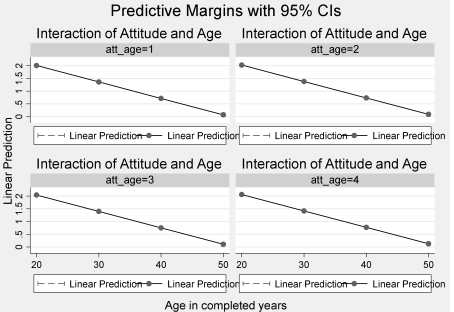
Figure 1. Predictive Margins Plots for attitude and age.
The overall correlation among all the variables in
Table 3 indicate that any improvement in a single construct is associated with improvement in other variables. The strongest relationship is shown between behavioral intension and individual attitude (r=0.809). The relationship suggest that attitude is a significant predictor of behavioral intension to use eCHIS among the study respondents in Western Kenya.
From
Figure 1, it can be observed that the attitude level decreases as age increases since all the slopes of the plots are negative. The implication is that age has a moderating effect on attitude level, and therefore, the interaction between age and attitude explains the level of decrease of attitude.
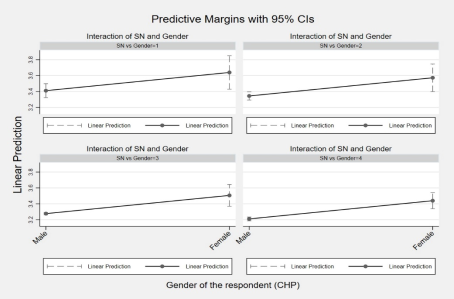
It can be seen from
Figure 2 that social norms influence gender in generating varied results at various levels. Overall, it is found that there is a greater sensitivity of women in responding to communal norms as their margins of prediction are slightly larger compared to men whose effects are either non-existent or weak. Programs need to take into account the gender differences and adjust interventions accordingly.
Figure 2. Predictive Margins Plots for gender and social norm (SN).
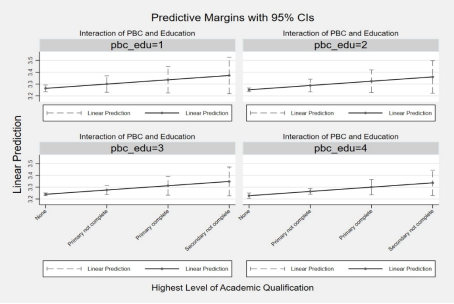
However, the impact that education makes on Perceived Behavior Control (PBC) depends on the type of PBC as shown in
Figure 3. People who have attained high educational qualifications find themselves better able to cope with tasks and behaviors compared to those who have received little or no education at all.
Figure 3. Predictive Margins Plots for education and perceived Behavioral Control (PBC).
4. Discussion
In particular, the present research evaluates the impact of sociodemographic features on the behavioral and technology related determinants of eCHIS adoption in Western Kenya drawing on the theoretical insights derived from both Technology Acceptance Model and the Theory of Planned Behavior constructs. The current study findings correspond to the existing theoretical predictions while disclosing additional context driven peculiarities similar but still somewhat different to those observed worldwide and regionally.
First, one should note a prevalence of female respondents (81.3%), which may be attributed to the nature of the healthcare workforce in Africa as women make up most of the frontline health workers in sub-Saharan Africa. Such demographics have been noted in various African countries like Uganda, Tanzania, and Ethiopia in connection with the use of digital technologies by CHW
| [3] | Mumbi, A., Mugo, P., Barasa, E., Abiiro, G., & Nzinga, J. (2024). Factors Influencing the Uptake of Public Health Interventions Delivery by Community Pharmacists: A thematic literature review. medRxiv, 2024-01.
https://doi.org/10.1101/2024.01.31.24302091 |
| [8] | Ireri, S., Waiganjo, P., Ochieng, D. O., Kagiri, M., Anindo, M., Adoyo, M.,... & Wanyungu, J. (2025). An exploration of the successful scale-up of the electronic community health information system in Kenya. Oxford Open Digital Health, 3, oqaf020. https://doi.org/10.1093/oodh/oqaf020 |
[3, 8]
. In contrast, more evenly distributed gender ratios are observed in the application of digital technologies in more developed economies like Europe and North America
| [9] | Kerras, H., Sánchez-Navarro, J. L., López-Becerra, E. I., & de-Miguel Gomez, M. D. (2020). The impact of the gender digital divide on sustainable development: comparative analysis between the European Union and the Maghreb. Sustainability, 12(8), 3347. https://doi.org/10.3390/su12083347 |
[9]
.
Descriptive statistics demonstrates moderate average values for both Technology Acceptance Model and Theory of Planned Behavior variables, namely, a score of 2.5 and 2.8, respectively. Thus, people express somewhat cautious support toward eCHIS. This finding is consistent with other studies conducted in LMICs where digital technologies require adjustment due to infrastructural and usability problems
| [10] | Akanbi, M. L., Ademola, R., Ishola, S. O., sulyman, A. S., Rasaq, M. O., Sanni, R. O., & Badmus, I. B. Digital skills and innovative technologies as determinants of effective e-learning among distance learning students in polytechnics in Kwara State, Nigeria. |
[10]
. However, a higher level of mean values can be seen globally, especially in Scandinavian countries where long term efforts to establish the eHealth system are associated with increased trust
| [11] | GOVERNANCE, F. T. B. eHealth Strategy Austria. |
[11]
.
The correlations between the main variables perceived usefulness (PU), perceived ease of use (PEOU), perceived behavioral control (PBC), subjective norm (SN), attitudes and behavioral intention (BI) are extremely high (r > 0.5). Such a finding is consistent with results obtained for a range of settings, in particular, for some Asian and Latin American settings where combined TAM-TPB model predictions are confirmed. In those cases, as well as in the current study, intention to use a technological product is mainly determined by both subjective-cognitive (PU, PEOU, PBC) and social (SN) factors
| [12] | Zhang, S., Roller, S., Goyal, N., Artetxe, M., Chen, M., Chen, S.,... & Zettlemoyer, L. (2022). Opt: Open pre-trained transformer language models. arXiv preprint arXiv: 2205.01068. https://doi.org/10.48550/arXiv.2205.01068 |
[12]
. In addition, the correlation between attitude and behavioral intention (r = 0.809) in the current study can be seen as especially strong; this finding reflects the role of attitude as an important mediator.
However, there is also another side to this matter. The correlation of all these variables with the actual use of eCHIS is weak (r < 0.2). As a consequence, we face a considerable discrepancy between intention to use the product and behavior associated with its practical application (intention-behavior gap). This problem has frequently been mentioned in relation to developing countries, where some structural problems like poor connectivity, lack of technical support, and increased workload make it very difficult to implement good intentions despite a positive attitude toward eCHIS
. Unlike studies conducted in developed nations, such gaps may arise because of less favorable conditions. The correlation matrix reveals strong interrelationships among TAM and TPB constructs, particularly between PEOU and PU (r = 0.704) and between SN and PEOU (r = 0.705). These findings are consistent with global evidence indicating that ease of use enhances perceived usefulness, while social environments shape user perceptions of technology. In collectivist societies, including many African and Asian contexts, social norms tend to exert stronger influence compared to individualistic societies, where personal attitudes and perceived utility dominate decision making
| [14] | Komisarof, A., & Akaliyski, P. (2025). New developments in Hofstede’s Individualism-Collectivism: A guide for scholars, educators, trainers, and other practitioners. International Journal of Intercultural Relations, 107, 102200.
https://doi.org/10.1016/j.ijintrel.2025.102200 |
| [15] | Chen, M., Gong, J., & Li, Q. (2022). The application of eHealth in cancer survivorship care: A review of web-based dyadic interventions for post-treatment cancer survivors and caregivers. Asia-Pacific Journal of Oncology Nursing, 9(10), 100109.
https://doi.org/10.1016/j.apjon.2022.100109 |
[14, 15]
. The strong SN - attitude relationship observed in this study supports this regional pattern.
The results of the moderation analysis emphasize the impact of sociodemographic factors on the connections. Older age showed a negative connection with attitude, meaning that people aged older were not as positively inclined towards eCHIS as younger individuals. This aligns with empirical data from other parts of the world where there is a negative correlation between the level of digitalization and age because of poor digital literacy and unwillingness to adapt to technology
| [16] | Krogstad, J., Passel, J. S., & Cohn, D. V. (2016). Pew Research Center. US Border Apprehensions Of Families And Unaccompanied Children Jump Dramatically. |
[16]
. Yet, this impact tends to be greater in developing nations.
Gender differences in the relationship between social norms and behavioral consequences reveal a slight tendency toward increased responsiveness to social pressure in females. This result agrees with regional data from sub-Saharan African and South Asian countries, where social norms determine the health-related behaviors of women
| [17] | Gani, M. O., Rahman, M. S., Bag, S., & Mia, M. P. (2024). Examining behavioural intention of using smart health care technology among females: dynamics of social influence and perceived usefulness. Benchmarking: An International Journal, 31(2), 330-352. https://doi.org/10.1108/BIJ-09-2022-0585 |
[17]
. On the contrary, the role of gender in the acceptance and use of digital health solutions is not significant in developed countries
. The minor distinctions obtained within this study confirm the existence of the effect; however, it is necessary to consider other intersecting variables.
Education positively moderates the relationship between perceived behavioral control and usage intention. Thus, users with more education report a higher sense of confidence in the operation of eCHIS. This trend is common for LMICs and developed countries because education is strongly linked to digital self-efficacy and literacy
| [19] | Ouedraogo, I., Benedikter, R., Some, B. M. J., & Diallo, G. (2023). A “Futures Literacy” Framework for Understanding the Future of Mobile Health Development in Africa. In Health Literacy-Advances and Trends. IntechOpen.
https://doi.org/10.5772/intechopen.105775 |
[19]
. It is possible that the education gap might be wider in LMICs compared to wealthier countries, increasing technological inequalities. For users with low levels of education, additional barriers could include poor navigation skills and difficulties in comprehending digital content.
Overall, the results show that, despite some divergence, there is also considerable convergence with other parts of the world. While the theoretical propositions of TAM and TPB are generally consistent globally, their power and implementation through behavior vary considerably due to local conditions. In the case of Western Kenya, structural obstacles seem to undermine the link between intention and behavior, which is typical for similar contexts but uncommon for affluent countries.
5. Conclusions
Finally, this research adds to the wider body of literature on digital health by illustrating how, while behavioral and technical factors influencing the utilization of eCHIS may be well grounded from a theoretical perspective, they are limited by various sociodemographic and contextual considerations in practice. The implementation of an intended plan continues to pose challenges that require more than just personal interventions.
6. Policy and Practice
On the basis of practical considerations, this discussion reinforces the importance of having strategies that consider the environment where interventions will be implemented. Interventions in LMICs would need to have more focus on infrastructure building, training, and user focused design than those in the best practice model used in other regions of the world. Age based training, gender related interventions, and educational approaches are particularly important.
7. Limitation
The current research is constrained by its focus on Western Kenya, limiting the ability of the results to be generalized to other settings with different infrastructural and socio-economic environments. Additionally, the cross-sectional approach and utilization of self-reported information may lead to biases, thus preventing causal inference. In addition, other variables that were not measured could have impacted the link between intention and eCHIS utilization.
Abbreviations
BI | Behavioral Intention |
CHP | Community Health Promoter |
CHU | Community Health Unit |
eCHIS | Electronic Community Health Information System |
DHS | Digital Health Systems |
eHIS | Electronic Health Information System |
IREC | Institutional Research Ethics Committee |
KHIS | Kenya Health Information System |
LMICs | Low- and Middle-Income Countries |
MCH | Maternal and Child Health |
NACOSTI | National Commission for Science, Technology and Innovation |
PBC | Perceived Behavioral Control |
PEOU / PEU | Perceived Ease of Use |
PHC | Primary Health Care |
PU | Perceived Usefulness |
RA | Research Assistant |
SD | Standard Deviation |
SN | Subjective Norms / Social Norms |
TAM | Technology Acceptance Model |
TPB | Theory of Planned Behavior |
UEAB | University of Eastern Africa, Baraton |
Acknowledgments
The authors would like to sincerely acknowledge; Mr. Gabriel Masinde - County Community Health Focal Person; Vihiga County for coordination of data collection. All CHPs who were involved in the study for their contribution. The authors would also like to extend their cheers to the Vihiga County Government Ministry of Health for allowing them to conduct the research. Finally, special appreciation goes to the research assistants; Mr. Benson Anjeo, Mr. Nicholas Nandoya, Mr. Gibson Aberu, Mr. Rainhard Bonnke and Mr. Henry Mukuna for their contribution towards the data collection process.
Author Contributions
Albert Kirwa: Conceptualization, Data curation, Formal Analysis, Funding acquisition, Investigation, Methodology, Project administration, Resources, Software, Validation, Visualization, Writing – original draft, Writing – review & editing
Rose Nyamwamu Wangui: Conceptualization, Investigation, Methodology, Supervision, Validation, Writing – review & editing
Poornima Ramasamy: Conceptualization, Investigation, Methodology, Supervision, Validation, Writing – review & editing
Data Availability Statement
The data is available from the corresponding author upon reasonable request.
Conflicts of Interest
The authors declare no conflicts of interest.
References
| [1] |
Mekonnen, Z. A., Chanyalew, M. A., Tilahun, B., Gullslett, M. K., & Mengiste, S. A. (2022). Lessons and implementation challenges of community health information system in LMICs: a scoping review of literature. Online Journal of Public Health Informatics, 14(1), e62639.
https://doi.org/10.5210/ojphi.v14i1.12731
|
| [2] |
Greenhalgh, T., Engebretsen, E., Bal, R., & Kjellström, S. (2023). Toward a values-informed approach to complexity in health care: Hermeneutic review. The Milbank Quarterly, 101(3), 646.
https://doi.org/10.1111/1468-0009.12656
|
| [3] |
Mumbi, A., Mugo, P., Barasa, E., Abiiro, G., & Nzinga, J. (2024). Factors Influencing the Uptake of Public Health Interventions Delivery by Community Pharmacists: A thematic literature review. medRxiv, 2024-01.
https://doi.org/10.1101/2024.01.31.24302091
|
| [4] |
Dawud, M. A., Kalayou, M. H., Wasihun, Y., Yasine, T., Ayalew, T., & Kasaye, M. D. (2025). Electronic Community Health Information System Practice and Associated Factors among Health Extension Workers in South Wollo Zone, North East Ethiopia: Mixed Study. Computer Methods and Programs in Biomedicine Update, 100215.
https://doi.org/10.1016/j.cmpbup.2025.100215
|
| [5] |
Morgan, D., & Shaw, G. (1970). Pion-pion scattering below 850 MeV. A unique solution. Physical Review D, 2(3), 520.
https://doi.org/10.1103/PhysRevD.2.520
|
| [6] |
Malik, M. A. (2022). Fragility and challenges of health systems in pandemic: lessons from India's second wave of coronavirus disease 2019 (COVID-19). Global Health Journal, 6(1), 44-49.
https://doi.org/10.1016/j.glohj.2022.01.006
|
| [7] |
Schrepp, M. (2020). On the Usage of Cronbach's Alpha to Measure Reliability of UX Scales. Journal of Usability Studies, 15(4).
|
| [8] |
Ireri, S., Waiganjo, P., Ochieng, D. O., Kagiri, M., Anindo, M., Adoyo, M.,... & Wanyungu, J. (2025). An exploration of the successful scale-up of the electronic community health information system in Kenya. Oxford Open Digital Health, 3, oqaf020.
https://doi.org/10.1093/oodh/oqaf020
|
| [9] |
Kerras, H., Sánchez-Navarro, J. L., López-Becerra, E. I., & de-Miguel Gomez, M. D. (2020). The impact of the gender digital divide on sustainable development: comparative analysis between the European Union and the Maghreb. Sustainability, 12(8), 3347.
https://doi.org/10.3390/su12083347
|
| [10] |
Akanbi, M. L., Ademola, R., Ishola, S. O., sulyman, A. S., Rasaq, M. O., Sanni, R. O., & Badmus, I. B. Digital skills and innovative technologies as determinants of effective e-learning among distance learning students in polytechnics in Kwara State, Nigeria.
|
| [11] |
GOVERNANCE, F. T. B. eHealth Strategy Austria.
|
| [12] |
Zhang, S., Roller, S., Goyal, N., Artetxe, M., Chen, M., Chen, S.,... & Zettlemoyer, L. (2022). Opt: Open pre-trained transformer language models. arXiv preprint arXiv: 2205.01068.
https://doi.org/10.48550/arXiv.2205.01068
|
| [13] |
Odendaal, N. (2022). Splintering by proxy: A reflection on the spatial impacts and distributed agency of platform urbanism. Journal of Urban Technology, 29(1), 21-27.
https://doi.org/10.1080/10630732.2021.2007204
|
| [14] |
Komisarof, A., & Akaliyski, P. (2025). New developments in Hofstede’s Individualism-Collectivism: A guide for scholars, educators, trainers, and other practitioners. International Journal of Intercultural Relations, 107, 102200.
https://doi.org/10.1016/j.ijintrel.2025.102200
|
| [15] |
Chen, M., Gong, J., & Li, Q. (2022). The application of eHealth in cancer survivorship care: A review of web-based dyadic interventions for post-treatment cancer survivors and caregivers. Asia-Pacific Journal of Oncology Nursing, 9(10), 100109.
https://doi.org/10.1016/j.apjon.2022.100109
|
| [16] |
Krogstad, J., Passel, J. S., & Cohn, D. V. (2016). Pew Research Center. US Border Apprehensions Of Families And Unaccompanied Children Jump Dramatically.
|
| [17] |
Gani, M. O., Rahman, M. S., Bag, S., & Mia, M. P. (2024). Examining behavioural intention of using smart health care technology among females: dynamics of social influence and perceived usefulness. Benchmarking: An International Journal, 31(2), 330-352.
https://doi.org/10.1108/BIJ-09-2022-0585
|
| [18] |
Bassanini, A., Broecke, S., & Rustad, L. A. (2024). New forms of work. In Handbook on Labour Markets in Transition (pp. 93-118). Edward Elgar Publishing.
https://doi.org/10.4337/9781839106958.0001
|
| [19] |
Ouedraogo, I., Benedikter, R., Some, B. M. J., & Diallo, G. (2023). A “Futures Literacy” Framework for Understanding the Future of Mobile Health Development in Africa. In Health Literacy-Advances and Trends. IntechOpen.
https://doi.org/10.5772/intechopen.105775
|
Cite This Article
-
APA Style
Kirwa, A., Wangui, R. N., Ramasamy, P. (2026). Sociodemographic Moderation of Behavioral and Technological Determinants of Electronic Community Health Information System Use in Western Kenya. Central African Journal of Public Health, 12(3), 193-200. https://doi.org/10.11648/j.cajph.20261203.18
 Copy
|
Copy
|
 Download
ACS Style
Kirwa, A.; Wangui, R. N.; Ramasamy, P. Sociodemographic Moderation of Behavioral and Technological Determinants of Electronic Community Health Information System Use in Western Kenya. Cent. Afr. J. Public Health 2026, 12(3), 193-200. doi: 10.11648/j.cajph.20261203.18
Copy
|
Download
AMA Style
Kirwa A, Wangui RN, Ramasamy P. Sociodemographic Moderation of Behavioral and Technological Determinants of Electronic Community Health Information System Use in Western Kenya. Cent Afr J Public Health. 2026;12(3):193-200. doi: 10.11648/j.cajph.20261203.18
Copy
|
Download
-
@article{10.11648/j.cajph.20261203.18,
  author = {Albert Kirwa and Rose Nyamwamu Wangui and Poornima Ramasamy},
  title = {Sociodemographic Moderation of Behavioral and Technological Determinants of Electronic Community Health Information System Use in Western Kenya},
  journal = {Central African Journal of Public Health},
  volume = {12},
  number = {3},
  pages = {193-200},
  doi = {10.11648/j.cajph.20261203.18},
  url = {https://doi.org/10.11648/j.cajph.20261203.18},
  eprint = {https://article.sciencepublishinggroup.com/pdf/10.11648.j.cajph.20261203.18},
  abstract = {Background: Digital Health System (DHS) adoption and use remain a challenge globally, especially in low- and middle-income countries due to infrastructural and user related barriers. In Kenya, electronic Community Health Information Systems (eCHIS) was introduced to improve community health data reporting, yet its utilization varies. This study examined how sociodemographic factors moderate behavioral and technological determinants of eCHIS use in Western Kenya. Objective: To examine how age, gender, and education level influence the relationship between behavioral and technological factors and the use of eCHIS among Community Health Promoters (CHPs) in Western Kenya. Methods: A cross-sectional study of 310 CHPs in Western Kenya was conducted using stratified random sampling. Data were collected via a structured Kobo Collect questionnaire guided by the Technology Acceptance Model and Theory of Planned Behavior. Descriptive statistics and Spearman’s correlation assessed relationships, while predictive margins in STATA version 18 examined sociodemographic moderation effects. Results: The study showed a predominantly female sample (81.3%) with most respondents having secondary education. All behavioral and technological constructs were strongly associated with behavioral intention (r > 0.5), but weakly linked to actual eCHIS use (r < 0.2). The results of the moderation analysis revealed that age negatively affects the attitudes towards eCHIS while females are more vulnerable to the effects of social norms. Furthermore, the level of education positively influences the perceived behavioral control and increases system use. While the results reveal that both the behavioral and technological predictors have strong influence on the intention to use eCHIS, its actual use seems to depend on sociodemographic characteristics, indicating an evident intention - behavior gap. Therefore, interventions designed specifically for different age, gender, and educational groups should be considered for promoting the use of eCHIS in Western Kenya.},
 year = {2026}
}
Copy
|
Download
-
TY  - JOUR
T1  - Sociodemographic Moderation of Behavioral and Technological Determinants of Electronic Community Health Information System Use in Western Kenya
AU  - Albert Kirwa
AU  - Rose Nyamwamu Wangui
AU  - Poornima Ramasamy
Y1  - 2026/05/28
PY  - 2026
N1  - https://doi.org/10.11648/j.cajph.20261203.18
DO  - 10.11648/j.cajph.20261203.18
T2  - Central African Journal of Public Health
JF  - Central African Journal of Public Health
JO  - Central African Journal of Public Health
SP  - 193
EP  - 200
PB  - Science Publishing Group
SN  - 2575-5781
UR  - https://doi.org/10.11648/j.cajph.20261203.18
AB  - Background: Digital Health System (DHS) adoption and use remain a challenge globally, especially in low- and middle-income countries due to infrastructural and user related barriers. In Kenya, electronic Community Health Information Systems (eCHIS) was introduced to improve community health data reporting, yet its utilization varies. This study examined how sociodemographic factors moderate behavioral and technological determinants of eCHIS use in Western Kenya. Objective: To examine how age, gender, and education level influence the relationship between behavioral and technological factors and the use of eCHIS among Community Health Promoters (CHPs) in Western Kenya. Methods: A cross-sectional study of 310 CHPs in Western Kenya was conducted using stratified random sampling. Data were collected via a structured Kobo Collect questionnaire guided by the Technology Acceptance Model and Theory of Planned Behavior. Descriptive statistics and Spearman’s correlation assessed relationships, while predictive margins in STATA version 18 examined sociodemographic moderation effects. Results: The study showed a predominantly female sample (81.3%) with most respondents having secondary education. All behavioral and technological constructs were strongly associated with behavioral intention (r > 0.5), but weakly linked to actual eCHIS use (r < 0.2). The results of the moderation analysis revealed that age negatively affects the attitudes towards eCHIS while females are more vulnerable to the effects of social norms. Furthermore, the level of education positively influences the perceived behavioral control and increases system use. While the results reveal that both the behavioral and technological predictors have strong influence on the intention to use eCHIS, its actual use seems to depend on sociodemographic characteristics, indicating an evident intention - behavior gap. Therefore, interventions designed specifically for different age, gender, and educational groups should be considered for promoting the use of eCHIS in Western Kenya.
VL  - 12
IS  - 3
ER  -
Copy
|
Download





 Share This Article
 Twitter
 Linked In
 Facebook