
The rising burden of diabetes in developing countries is a call for concern. In Cameroon there is little data in Cameroon on the mental health status of people living with diabetes. This study assessed the mental health status (depression and anxiety) of people living with type 2 diabetes mellitus (T2DM) seeking treatment in the Buea Regional Hospital, Cameroon. The study was a hospital-based cross-sectional study, involving 230 type 2 diabetic patients seeking treatment in the Buea Regional hospital. Quantitative data on depression and anxiety was collected using standard questionnaires Patient Health Questionnaire-9 (PHQ9) and Generalize Anxiety Disorder-7 (GAD-7). The scores were used to determine the prevalence of depression and anxiety. A binary logistic regression was done to determine the factors independently associated with anxiety and depression among T2DM. A total of 230 participants were recruited into the study with more than half being female 164 (71.3%). The mean age of 56.8 ±12.37. The prevalence of anxiety and depression were (19.6%) and (30.0%) respectively. Anxiety was associated with the level of income (AOR= 9.28, 95%CI [1.07-80.37]) and the duration of the diseases (AOR= 6.64, 95%CI [2.34-18.91]). Likewise, depression was also associated with level of income (AOR= 4.50, 95%CI [1.13-18.00]) and the duration of the disease (AOR= 2.46, 95%CI [1.35-5.16]) Those with comorbidity (AOR= 2.26) were more likely to be depressed compared to those without co-morbidity. Those who did physical exercises were less likely to be depressed (AOR= 0.41) compared to those who didn’t do physical exercise. In conclusion, these findings provide context-specific evidence to guide interventions aimed at improving the psychosocial well-being of type 2 diabetic patients in Cameroon. We therefore recommend from the highlight of the study, the necessity to screen diabetic patients for mental health related issues and to incorporate mental health counselling in their hospital care.
| Published in | Central African Journal of Public Health (Volume 12, Issue 2) |
| DOI | 10.11648/j.cajph.20261202.13 |
| Page(s) | 76-83 |
| Creative Commons |
This is an Open Access article, distributed under the terms of the Creative Commons Attribution 4.0 International License (http://creativecommons.org/licenses/by/4.0/), which permits unrestricted use, distribution and reproduction in any medium or format, provided the original work is properly cited. |
| Copyright |
Copyright © The Author(s), 2026. Published by Science Publishing Group |
Anxiety, Depression, Diabetes Type 2, Mental Health, Cameroon
Variable | Category | Frequency | Percentage |
|---|---|---|---|
Sex | Female | 164 | 71.3 |
Male | 66 | 28.7 | |
Total | 230 | 100 | |
Age group in years | < 40 | 24 | 10.4 |
40 - 60 | 125 | 54.3 | |
> 60 | 81 | 35.2 | |
Total | 230 | 100 | |
Level of education | No formal education | 22 | 9.6 |
Primary school | 46 | 20 | |
Secondary school | 47 | 20.4 | |
High school | 49 | 21.3 | |
University | 66 | 28.7 | |
Total | 230 | 100 | |
Employment status | Employed by a private sector | 14 | 6.1 |
Employed by the Government | 38 | 16.5 | |
Retired | 46 | 20 | |
Self employed | 82 | 35.7 | |
Unemployed | 50 | 21.7 | |
Total | 230 | 100 | |
Income in CFA | ≤ 50,000 | 83 | 36.1 |
51,000 -100,000 | 71 | 30.9 | |
101,000 -200,000 | 56 | 24.3 | |
201,000-300,000 | 15 | 6.5 | |
>300,000 | 5 | 2.2 | |
Total | 230 | 100 | |
Marital status | Divorce | 8 | 3.5 |
Living with a partner | 14 | 6.1 | |
Married | 148 | 64.3 | |
Single | 32 | 13.9 | |
Widow/widower | 28 | 12.2 | |
Total | 230 | 100 | |
House hold size | 0_3 | 39 | 17 |
4_6 | 180 | 78.3 | |
>10 | 11 | 4.8 | |
Total | 230 | 100 | |
Responsible for bills | Your children | 102 | 44.3 |
Yourself | 153 | 66.5 | |
Friends | 27 | 11.7 | |
Insurance | 3 | 1.3 | |
Others | 20 | 8.7 | |
Total | 305 | 132.6 |
Variable | Category | Frequency | Percent |
|---|---|---|---|
Alcohol consumption | No | 136 | 59.1 |
Yes | 94 | 40.9 | |
Total | 230 | 100 | |
Smoking of cigarette | No | 211 | 91.7 |
Yes | 19 | 8.3 | |
Total | 230 | 100 | |
Does physical exercise | No | 162 | 70.4 |
Yes | 68 | 29.6 | |
Total | 230 | 100 | |
Suffering from comorbidity (hypertension, Cardiovascular diseases) | No | 76 | 33 |
Yes | 154 | 67 | |
Total | 230 | 100 | |
Duration of the disease | 1-5 | 125 | 54.3 |
6-10 | 74 | 32.2 | |
>10 | 31 | 13.5 | |
Total | 230 | 100 |
variable | Categories | AOR | 95% CI | ||
|---|---|---|---|---|---|
Lower | Upper | P-value | |||
Education level | High school | 0.87 | 0.29 | 2.61 | 0.803 |
No formal education | 0.80 | 0.22 | 2.90 | 0.730 | |
Primary school | 0.22 | 0.06 | 0.74 | 0.015 | |
Secondary school | 0.52 | 0.17 | 1.57 | 0.247 | |
University | 1 | ||||
Income level | ≤ 50,000 | 9.28 | 1.07 | 80.37 | 0.043 |
101,000 -200,000 | 1.28 | 0.12 | 13.23 | 0.838 | |
51,000 -100,000 | 5.50 | 0.65 | 46.81 | 0.119 | |
> 200,000 | 1 | ||||
Physical exercise | Yes | 0.43 | 0.17 | 1.09 | 0.076 |
No | 1 | ||||
Duration of the disease | >10 | 6.64 | 2.34 | 18.91 | <0.001 |
6-10 | 1.81 | 0.76 | 4.30 | 0.180 | |
1-5 | |||||
variable | Categories | AOR | 95% CI | P-value | |
|---|---|---|---|---|---|
Lower | Upper | ||||
Income level | ≤ 50,000 | 4.50 | 1.13 | 18.00 | 0.033 |
101,000 -200,000 | 2.14 | 0.52 | 8.82 | 0.292 | |
51,000 -100,000 | 2.77 | 0.69 | 11.08 | 0.149 | |
> 200,000 | 1 | ||||
Physical exercise | Yes | 0.41 | 0.19 | 0.86 | 0.018 |
No | 1 | ||||
Duration of the disease | >10 | 2.19 | 0.87 | 5.51 | 0.097 |
6_10 | 2.64 | 1.35 | 5.16 | 0.005 | |
1_5 | 1 | ||||
Comorbidity (hypertension, Cardiovascular diseases) | Yes | 2.26 | 1.12 | 4.58 | 0.023 |
No | 1 | ||||
GAD-7 | Generalized Anxiety Disorder |
PHQ9 | Patient Health Questionnaire 9 |
T2DM | Type 2 diabetes Mellitus |
| [1] | Goyal R, Jialal I. Diabetes mellitus type 2. Ogurtsova K, da Rocha Fernandes JD, Huang Y, Linnenkamp U, Guariguata L, Cho NH, Cavan D, Shaw JE, Makaroff LE. IDF Diabetes Atlas: Global estimates for the prevalence of diabetes for 2015 and 2040. Diabetes research and clinical practice. 2017 Jun 1; 128: 40-50. |
| [2] | Reed J, Bain S, Kanamarlapudi V. A review of current trends with type 2 diabetes epidemiology, aetiology, pathogenesis, treatments and future perspectives. Diabetes, Metabolic Syndrome and Obesity. 2021 Aug 10: 3567-602. |
| [3] | Bigna JJ, Nansseu JR, Katte JC, Noubiap JJ. Prevalence of prediabetes and diabetes mellitus among adults residing in Cameroon: a systematic review and meta-analysis. Diabetes Research and Clinical Practice. 2018 Mar 1; 137: 109-18. |
| [4] | Assah F, Mbanya JC. Diabetes in sub-Saharan Africa. Diabetes mellitus in developing countries and underserved communities. 2017: 33-48. |
| [5] | International Diabetes Federation. (2025). IDF Diabetes Atlas 2025: Global Diabetes Data & Insights. IDF Diabetes Atlas 2025. |
| [6] |
World Health Organization. WHO: Fact-sheet Mental Health (2025). Available from:
https://www.who.int/news-room/fact-sheets/detail/mental-health-strengthening-our-response .(accessed 25 October 2025). |
| [7] | Camera A, Baldé NM, Enoru S, Bangoura JS, Sobngwi E, Bonnet F. Prevalence of anxiety and depression among diabetic African patients in Guinea: association with HbA1c levels. Diabetes & metabolism. 2015 Feb 1; 41(1): 62-8. |
| [8] | World Health Organization. Classification of diabetes mellitus. WHO 2019. |
| [9] | Starkstein SE, Davis WA, Dragovic M, Cetrullo V, Davis TM, Bruce DG (2014) Diagnostic criteria for depression in type 2 diabetes: a data-driven approach. PLoS One 9: e112049. |
| [10] | Haque MJ, Das CK, Ara R, Alam MEU, Ullah SKRKMASSA, Hossain ZM. Prevalence of Generalized Anxiety Disorder and its effect on Daily Living in the Rural Community of Rajshahi. TAJ 2016; Volume 27(1). |
| [11] | Aroke D, Mapoure YN, Mbarga TN, Dimala CA, Danwe VK, Njamnshi AK, Choukem SP. Prevalence and factors associated with depression among type 2 diabetes patients in a Reference Hospital in Cameroon. Neurology, Psychiatry and Brain Research. 2020 Sep 1; 37: 123-8. |
| [12] | Mohammed HD, Sheikh TL, Bello F, Abubakar-Abdullateef A, Suleiman HM, Kakangi AS. Depression and Anxiety Disorders among Persons with Type 2 Diabetes Mellitus in a Tertiary Hospital in Zaria, Nigeria. West African journal of medicine. 2024 Sep 30; 41(9): 937-43. |
| [13] |
Benmaamar S, Lazar N, El Harch I, Maiouak M, Qarmiche N, Otmani N, Salhi H, Tachfouti N, El Ouahabi H, El Fakir S. Depression and anxiety in patients with diabetes in a Moroccan region. Encephale. 2022 Dec; 48(6): 601-606.
https://doi.org/10.1016/j.encep.2021.06.014 Epub 2021 Oct 13. |
| [14] | Ganasegeran K, Renganathan P, Manaf RA, Al-Dubai SA. Factors associated with anxiety and depression among type 2 diabetes outpatients in Malaysia: a descriptive cross-sectional single-centre study. BMJ Open. 2014 Apr 23; 4(4): e004794. |
| [15] | Oana A, Bogdan T, Adina B, Romulus T, Predictive Factors of Anxiety and Depresion in Patients with type 2 Diabetes Mellitus. J. Clin. Med. 2024, 13(10), 3006. |
| [16] | Sukanya R, Archith K, Krishna PM, Santosh KC. Comorbidity of Anxiety and Depression with Hypertension, Diabetes, and Cardiovascular Diseases: A Selective Systematic Review from India. EMJ Diabet. 2022; |
APA Style
Esembeson, M., Endam, T. S., Nicholas, T. (2026). Mental Health Status and Associated Factors Among Type 2 Diabetic Patients in Cameroon. Central African Journal of Public Health, 12(2), 76-83. https://doi.org/10.11648/j.cajph.20261202.13
ACS Style
Esembeson, M.; Endam, T. S.; Nicholas, T. Mental Health Status and Associated Factors Among Type 2 Diabetic Patients in Cameroon. Cent. Afr. J. Public Health 2026, 12(2), 76-83. doi: 10.11648/j.cajph.20261202.13
@article{10.11648/j.cajph.20261202.13,
  author = {Malika Esembeson and Tanyi Shelly Endam and Tendongfor Nicholas},
  title = {Mental Health Status and Associated Factors Among Type 2 Diabetic Patients in Cameroon},
  journal = {Central African Journal of Public Health},
  volume = {12},
  number = {2},
  pages = {76-83},
  doi = {10.11648/j.cajph.20261202.13},
  url = {https://doi.org/10.11648/j.cajph.20261202.13},
  eprint = {https://article.sciencepublishinggroup.com/pdf/10.11648.j.cajph.20261202.13},
  abstract = {The rising burden of diabetes in developing countries is a call for concern. In Cameroon there is little data in Cameroon on the mental health status of people living with diabetes. This study assessed the mental health status (depression and anxiety) of people living with type 2 diabetes mellitus (T2DM) seeking treatment in the Buea Regional Hospital, Cameroon. The study was a hospital-based cross-sectional study, involving 230 type 2 diabetic patients seeking treatment in the Buea Regional hospital. Quantitative data on depression and anxiety was collected using standard questionnaires Patient Health Questionnaire-9 (PHQ9) and Generalize Anxiety Disorder-7 (GAD-7). The scores were used to determine the prevalence of depression and anxiety. A binary logistic regression was done to determine the factors independently associated with anxiety and depression among T2DM. A total of 230 participants were recruited into the study with more than half being female 164 (71.3%). The mean age of 56.8 ±12.37. The prevalence of anxiety and depression were (19.6%) and (30.0%) respectively. Anxiety was associated with the level of income (AOR= 9.28, 95%CI [1.07-80.37]) and the duration of the diseases (AOR= 6.64, 95%CI [2.34-18.91]). Likewise, depression was also associated with level of income (AOR= 4.50, 95%CI [1.13-18.00]) and the duration of the disease (AOR= 2.46, 95%CI [1.35-5.16]) Those with comorbidity (AOR= 2.26) were more likely to be depressed compared to those without co-morbidity. Those who did physical exercises were less likely to be depressed (AOR= 0.41) compared to those who didn’t do physical exercise. In conclusion, these findings provide context-specific evidence to guide interventions aimed at improving the psychosocial well-being of type 2 diabetic patients in Cameroon. We therefore recommend from the highlight of the study, the necessity to screen diabetic patients for mental health related issues and to incorporate mental health counselling in their hospital care.},
 year = {2026}
}
TY  - JOUR
T1  - Mental Health Status and Associated Factors Among Type 2 Diabetic Patients in Cameroon
AU  - Malika Esembeson
AU  - Tanyi Shelly Endam
AU  - Tendongfor Nicholas
Y1  - 2026/03/17
PY  - 2026
N1  - https://doi.org/10.11648/j.cajph.20261202.13
DO  - 10.11648/j.cajph.20261202.13
T2  - Central African Journal of Public Health
JF  - Central African Journal of Public Health
JO  - Central African Journal of Public Health
SP  - 76
EP  - 83
PB  - Science Publishing Group
SN  - 2575-5781
UR  - https://doi.org/10.11648/j.cajph.20261202.13
AB  - The rising burden of diabetes in developing countries is a call for concern. In Cameroon there is little data in Cameroon on the mental health status of people living with diabetes. This study assessed the mental health status (depression and anxiety) of people living with type 2 diabetes mellitus (T2DM) seeking treatment in the Buea Regional Hospital, Cameroon. The study was a hospital-based cross-sectional study, involving 230 type 2 diabetic patients seeking treatment in the Buea Regional hospital. Quantitative data on depression and anxiety was collected using standard questionnaires Patient Health Questionnaire-9 (PHQ9) and Generalize Anxiety Disorder-7 (GAD-7). The scores were used to determine the prevalence of depression and anxiety. A binary logistic regression was done to determine the factors independently associated with anxiety and depression among T2DM. A total of 230 participants were recruited into the study with more than half being female 164 (71.3%). The mean age of 56.8 ±12.37. The prevalence of anxiety and depression were (19.6%) and (30.0%) respectively. Anxiety was associated with the level of income (AOR= 9.28, 95%CI [1.07-80.37]) and the duration of the diseases (AOR= 6.64, 95%CI [2.34-18.91]). Likewise, depression was also associated with level of income (AOR= 4.50, 95%CI [1.13-18.00]) and the duration of the disease (AOR= 2.46, 95%CI [1.35-5.16]) Those with comorbidity (AOR= 2.26) were more likely to be depressed compared to those without co-morbidity. Those who did physical exercises were less likely to be depressed (AOR= 0.41) compared to those who didn’t do physical exercise. In conclusion, these findings provide context-specific evidence to guide interventions aimed at improving the psychosocial well-being of type 2 diabetic patients in Cameroon. We therefore recommend from the highlight of the study, the necessity to screen diabetic patients for mental health related issues and to incorporate mental health counselling in their hospital care.
VL  - 12
IS  - 2
ER  -
Department of Public Health and Hygiene, University of Buea, Buea, Cameroon;Regional Hospital Buea, Buea, Cameroon
Department of Nursing, University of Buea, Buea, Cameroon
Department of Public Health and Hygiene, University of Buea, Buea, Cameroon
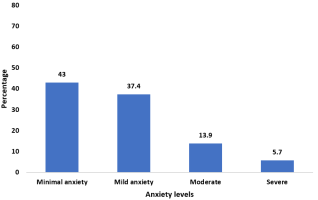
Figure 1. Level of anxiety among study participants.
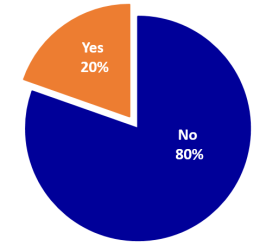
Figure 2. Prevalence of anxiety amongst type 2 diabetic patients in the Buea Regional Hospital.
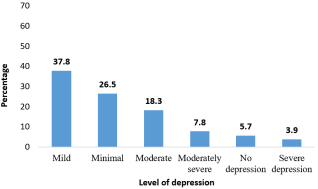
Figure 3. Level of depression among participant in the Buea Regional Hospital.
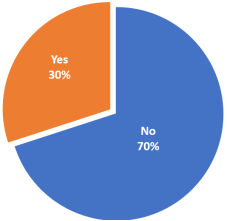
Figure 4. Prevalence of Depression amongst type 2 diabetic patients in the Buea Regional Hospital.



 Share This Article
 Twitter
 Linked In
 Facebook
 Copy
Copy Download